Autopsy raises many questions that people may find difficult to ask. Films often shape their expectations, leaving the purpose and limits of the examination unclear. These common misconceptions help explain the role of post-mortem examination in clinical practice and forensic investigation.
The five biggest misconceptions about autopsy
- An autopsy is performed after every death.
No. - An autopsy always establishes the precise medical cause of death.
Not always; the answer may require additional tests or remain undetermined. - An autopsy settles every question.
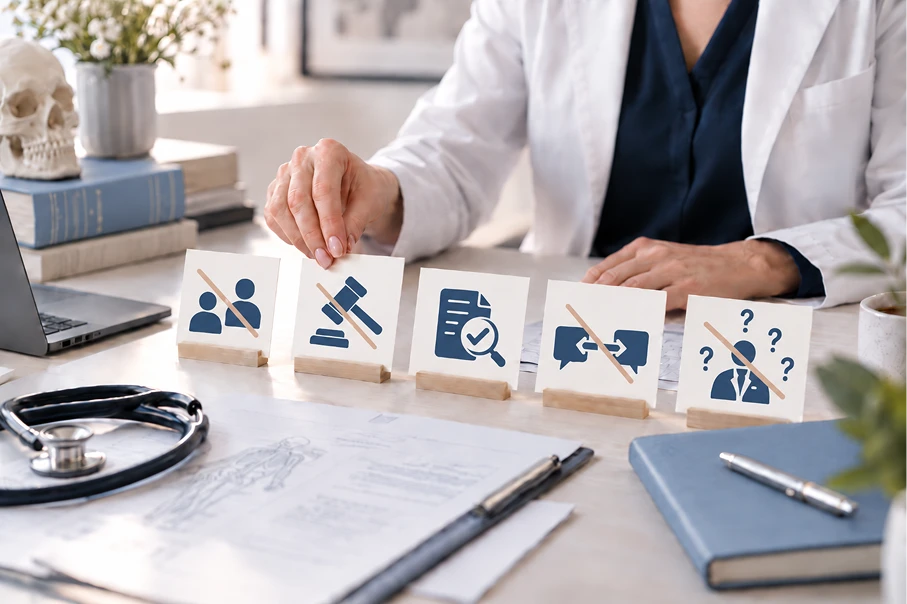
No. Some circumstances cannot be established from medical findings alone. - Autopsy is only about death.
In fact, it can tell us a great deal about life as well. - Autopsy is still performed in the same way as it was a hundred years ago.
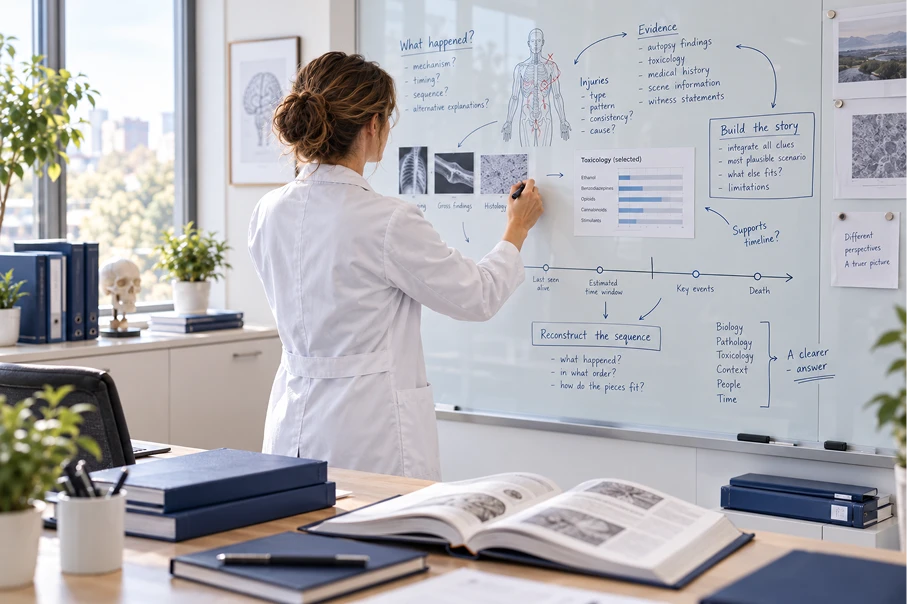
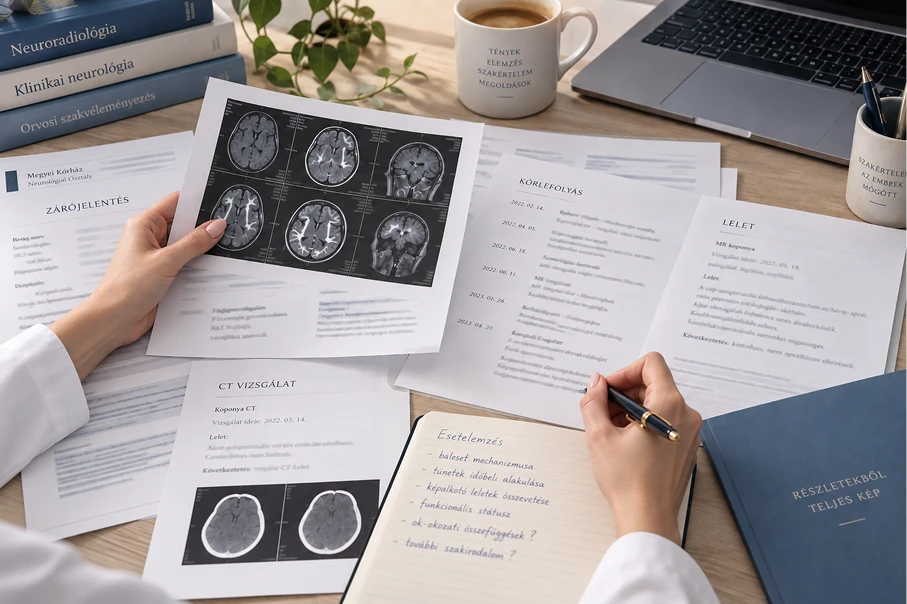
No. Post-mortem imaging, toxicology, histology and genetic testing may now supplement the examination.
An autopsy is a method of investigating death and answering specific medical questions.
What can an autopsy teach the living?
This may sound strange. Yet every autopsy is ultimately for the living.
It can identify disease, inform prevention and reveal findings relevant to the assessment of care.
Sometimes it finds no evidence that a different course of care would have changed the outcome.
Its findings may help improve care for the living.
What does an autopsy room smell like?
This is one of the most common – and perhaps most unexpected – questions a forensic medical expert is asked.
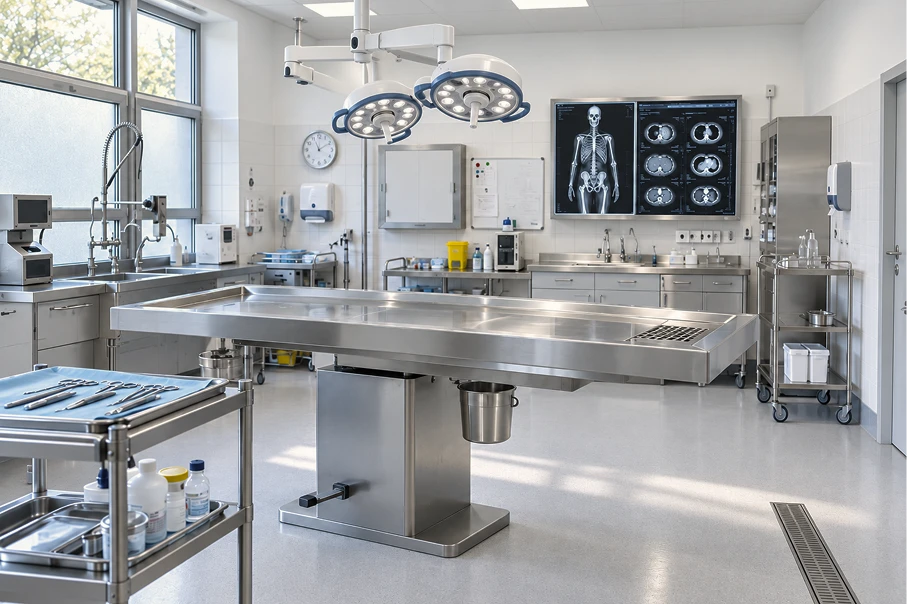
Films can create an exaggerated impression. In a modern autopsy room, ventilation, cleaning and infection-control measures help maintain a suitable working environment; odours vary with the circumstances of each case.
There is no single smell characteristic of every autopsy room. Disinfectants may be noticeable, but individual cases can present quite differently.
Naturally, some cases involve special circumstances, but these are not representative of everyday work.
Attention often turns quickly to the examination and accurate documentation of the findings.
What matters in the autopsy room is what we observe and record.
The autopsy room is a workplace where the deceased are treated with respect and their findings examined with care.