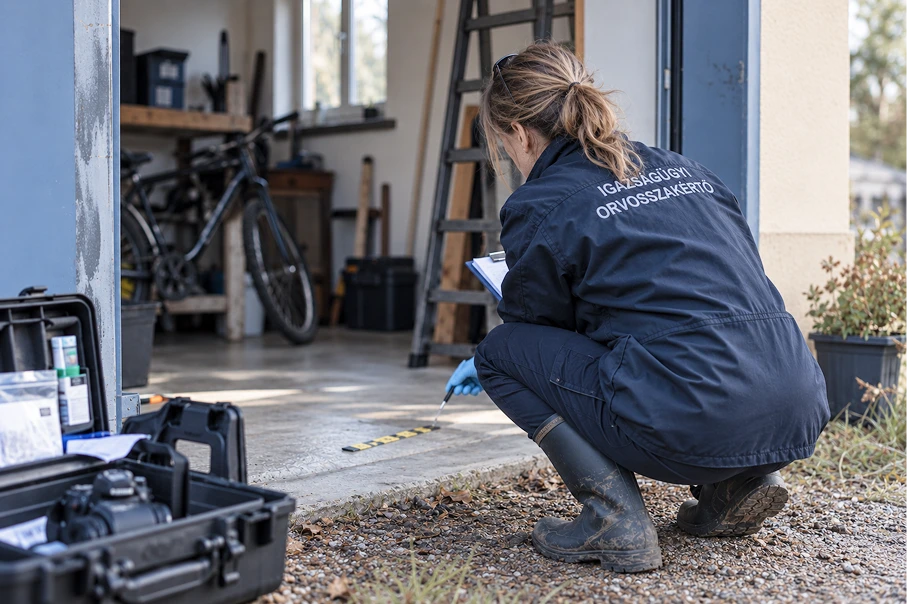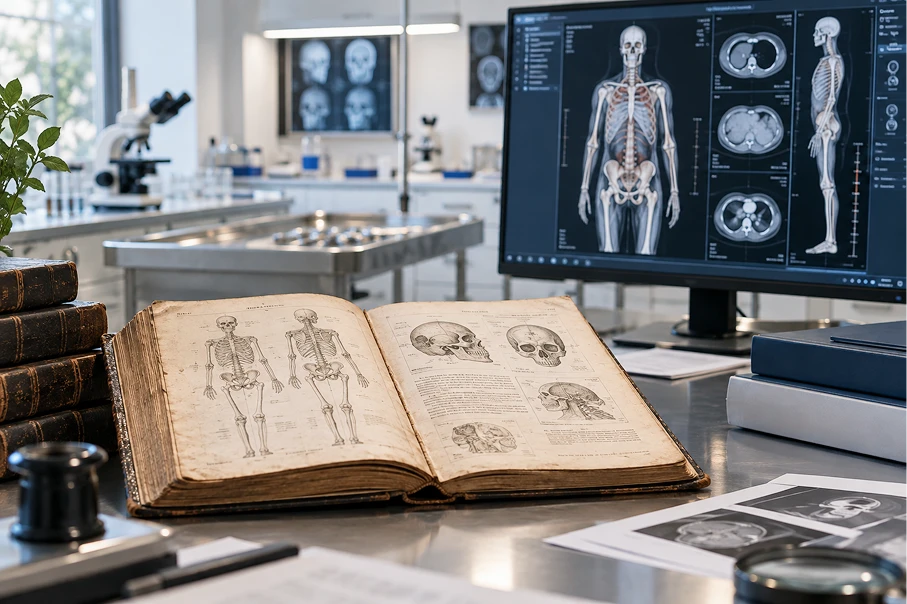
The work of forensic medical experts is often discussed in connection with individual cases. Far less is said about the reasons for choosing this career, the abilities it demands and the professional motivation that sustains it over time. Yet these reveal a great deal about the thinking behind expert opinions.
People do not usually become forensic medical experts by accident. The profession demands sound medical knowledge, logical thinking, curiosity and perseverance in equal measure.
Clinical medicine aims primarily to diagnose and treat; a forensic medical expert examines medical evidence to assess past events.
An injury, laboratory result or post-mortem finding may help reconstruct events. It is like a puzzle: each piece matters, and gaps in the evidence can matter too.
This way of thinking has always appealed to me. Not giving a quick answer, but finding the most accurate answer possible. A good expert must be a doctor, a researcher and an analyst at the same time. It is this constant professional challenge that continues to motivate me with the same enthusiasm after more than two decades.
What abilities does a forensic medical expert need?
People often expect the answer to be: “They are like a detective.” But the reality is far more complex.
A forensic medical expert needs a sound knowledge of anatomy, physiology and pathophysiology. They must understand injury healing, disease progression, toxicology, the applicable legal framework and current scientific literature.
Surprisingly, however, these are not the most important abilities.
Perhaps the most important is curiosity: not being satisfied with the first answer.
The second is patience. In a file running to hundreds of pages, the first and last page must be read with equal care.
The third is critical scrutiny. Every account must be considered alongside the documented clinical and other objective findings.
And finally, perhaps the most important of all: humility. Even after more than twenty years in the profession, there are still cases that raise new questions. And that is exactly as it should be.
Why do I still love this work?
Sometimes people ask me: “Doesn’t it become boring after all these years?” I always smile.
Anyone who asks that has probably never seen two identical cases. Neither have I.
Even now, a scene can surprise me. A human story can take an unexpected turn. I may spend days searching for the answer to a professional question. And sometimes I encounter a problem I have never faced before.
Many people think experience means having seen everything. I believe it means the exact opposite. Experience teaches us always to remain curious.