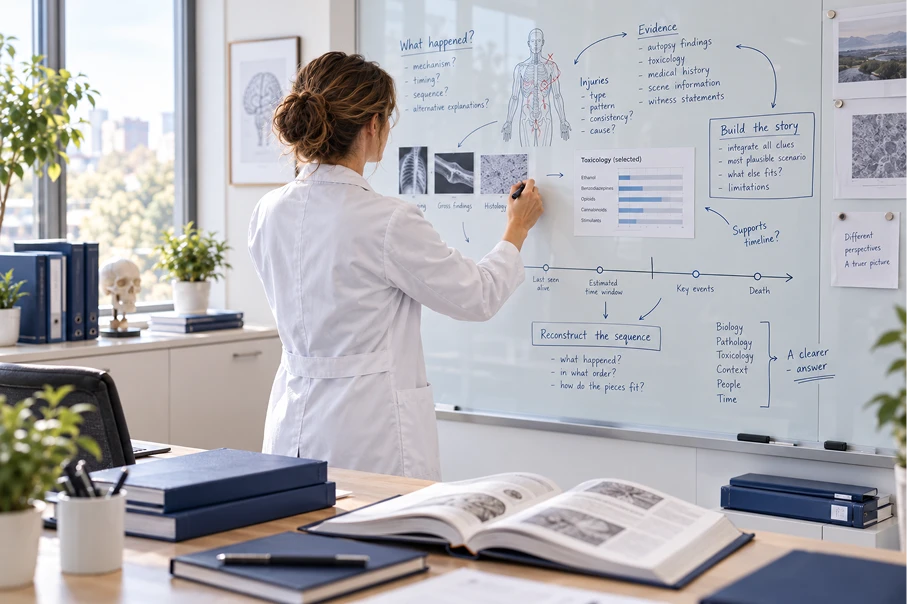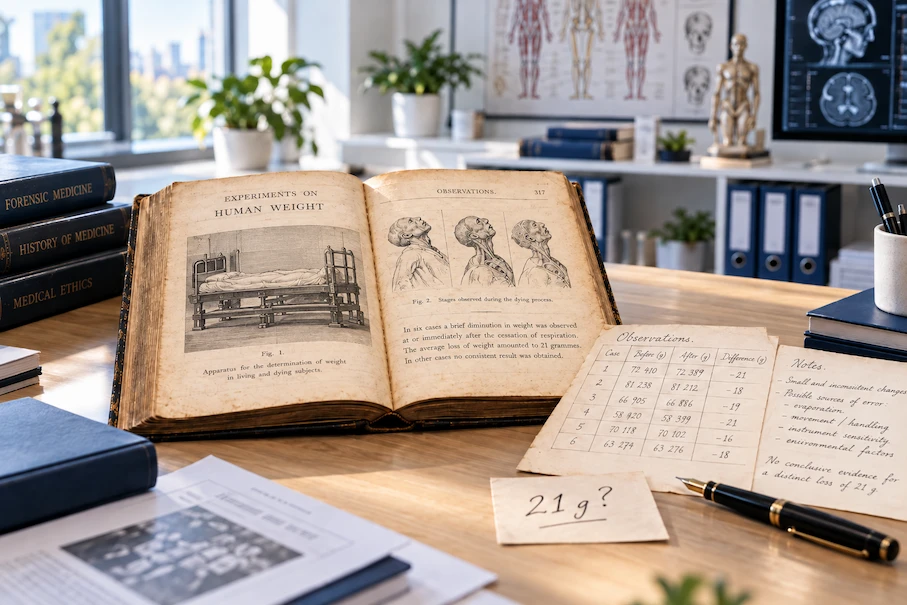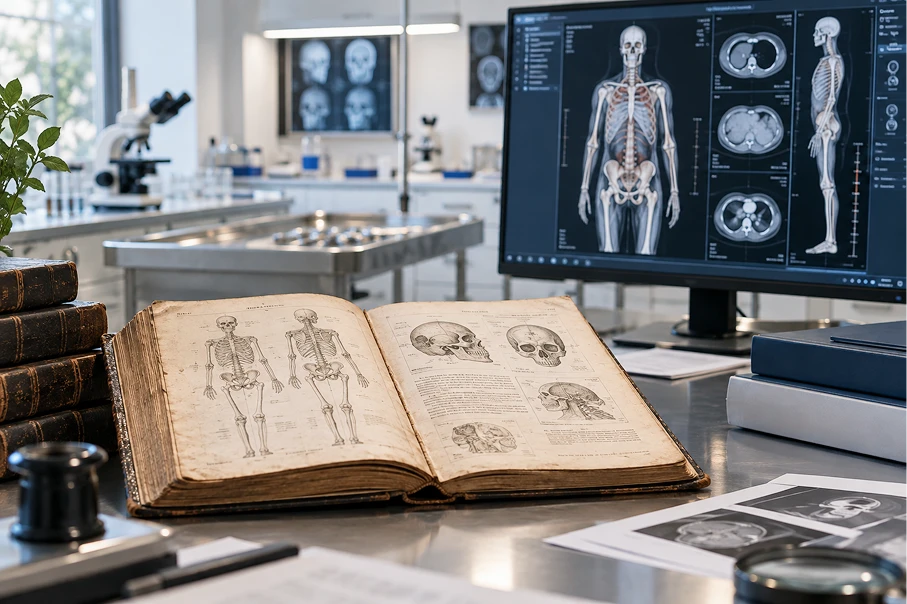
Forensic medicine today also relies on advanced imaging, laboratory analysis and digital technology. Yet the field’s roots reach back hundreds of years. Its evolution is clearly reflected in the transformation of the post-mortem examination room, while the expert’s fundamental question has remained the same: what really happened?
How did forensic medicine emerge?
Many people are surprised when I tell them that forensic medicine is not a modern science.
Even ancient civilisations recognised that assessing certain deaths, injuries or poisonings required specialist medical knowledge.
One of the earliest known forensic texts was written in China in the thirteenth century. The Xi Yuan Ji Lu, commonly translated as The Washing Away of Wrongs, described methods for examining deaths and injuries and distinguishing possible causes.
In Europe, forensic medicine developed as a distinct discipline during the sixteenth and seventeenth centuries; its institutional history in Hungary took shape over the following centuries.
Today, forensic work can draw on computed tomography, magnetic resonance imaging, DNA profiling, digital imaging, forensic toxicology and computer-assisted analysis.
But one thing has remained the same.
A forensic medical expert still seeks the answer to the same question as centuries ago: what really happened?
How has the post-mortem examination room changed over the past 150 years?
Anyone entering the post-mortem examination room of a modern institute of forensic medicine may be surprised by how little it resembles the image presented in films or old novels.
One hundred and fifty years ago, autopsy relied primarily on the eye, the hand and experience. The forensic physician, as the role was then known, had to depend almost entirely on their own powers of observation.
There were no CT scans, MRI, DNA analysis, digital imaging or modern toxicology laboratories. A single area of discolouration, the shape of a wound or a bone fracture might provide the only clue.
Today, a post-mortem examination may be preceded by whole-body post-mortem CT and supplemented by imaging, histology, toxicology, genetic analysis or digital reconstruction, where indicated.
These techniques complement the post-mortem examination and the expert’s interpretation; they do not determine the findings on their own.
Many people think computers are taking over more and more tasks. I see it differently: we have ever more data available, and someone must interpret it.
The post-mortem examination room has changed. The expert’s most important task, however, has remained the same.
To understand what really happened.
Why do I love old medical books?
My bookshelves hold volumes that are more than a hundred years old. Not out of nostalgia, but because it is fascinating to see how our predecessors thought.
Many things have changed. The language. The technology. Diagnostics.
But one thing has remained the same.
The need to observe the human body accurately.