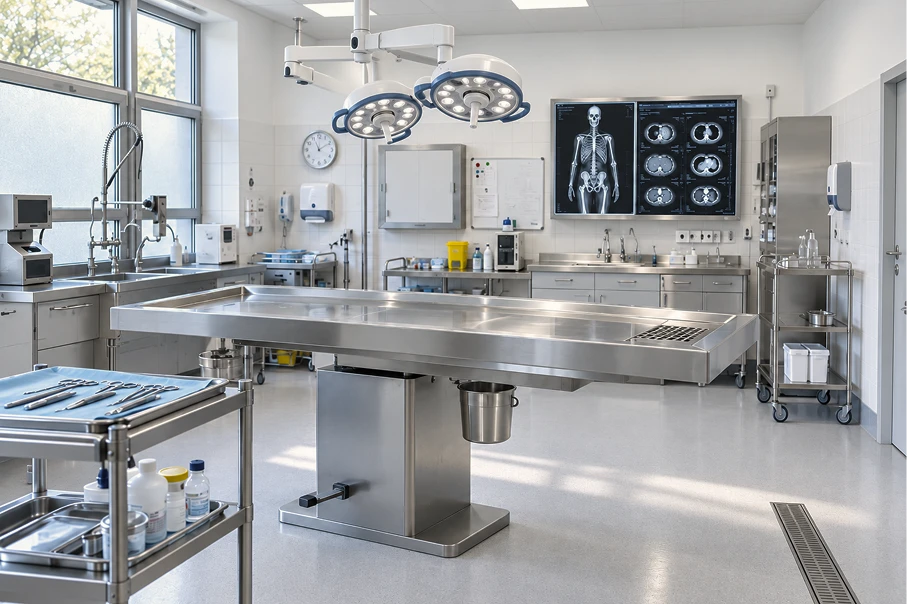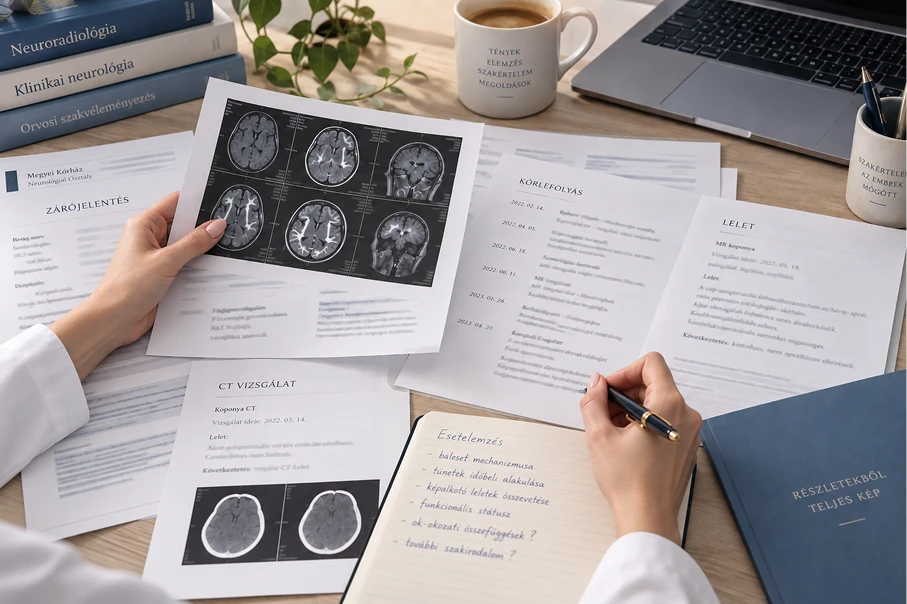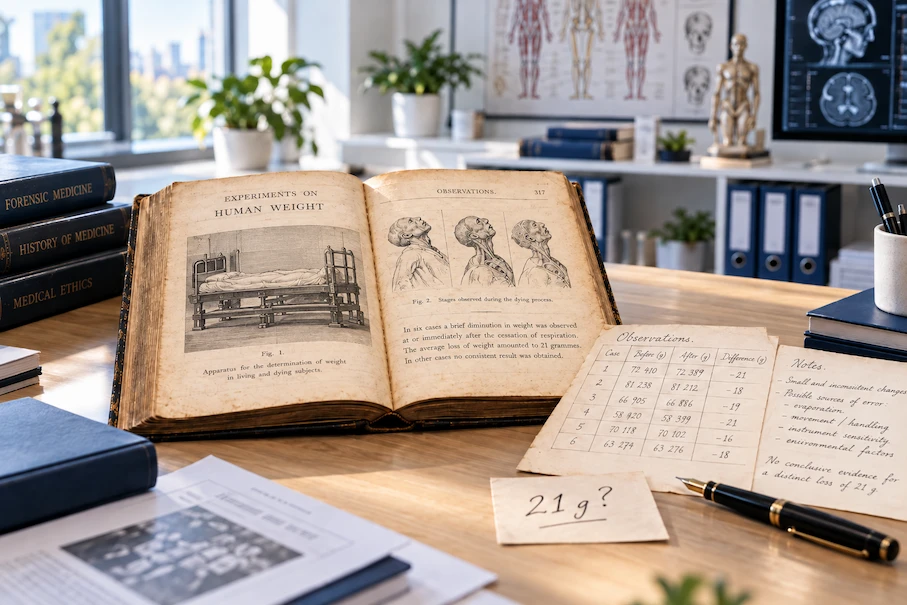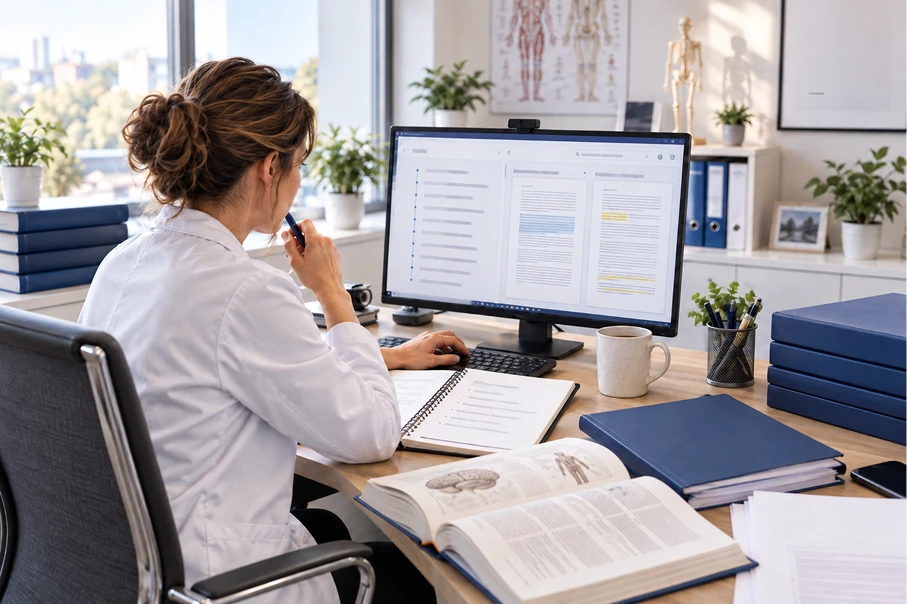
For many people, the work of a forensic medical expert brings to mind the post-mortem examination room and scene examinations. Yet a substantial part of a typical working day is spent at a desk. Records, consultations, scientific literature and sustained thought occupy most of my time.
Behind the scenes of expert work: what happens over a cup of coffee?
Many people imagine a forensic medical expert spending all day in the post-mortem examination room, examining traces through a magnifying glass and moving from one scene worthy of a crime drama to another. The reality is far less cinematic – and involves far more coffee.
Much of my time is spent at a computer. I compare clinical records, read scientific publications, consult guidelines, build chronologies and repeatedly check whether each finding fits the documented course of events.
Medical records. Findings. Legislation. Professional literature. Publications.
Telephone calls. Lawyers. Authorities. Consultations.
A post-mortem examination is only one part of the work. Analysis and writing take up much of my time.
At times, I spend longer considering a single sentence than it would take to read an entire report. A carefully worded medical conclusion must withstand scrutiny in court, even years later.
And yes… sometimes the most important “working tool” really is a good cup of coffee.
Is a forensic medical expert always serious?
I think many people imagine us walking around with serious expressions all day, using Latin terminology and talking exclusively about deaths.
The reality is much more human.
Of course, there are days when we encounter tragedy. Cases that leave us quieter on the way home.
But there are also moments when well-timed humour helps to ease the tension.
We do not laugh at tragedy. We laugh at ordinary human situations that arise in any workplace, whether in the post-mortem examination room, at a scene or in court.
Humour is not a lack of respect. Often, it is precisely what helps us remain human after many years in the profession.
And I believe that is at least as important as professional knowledge.